
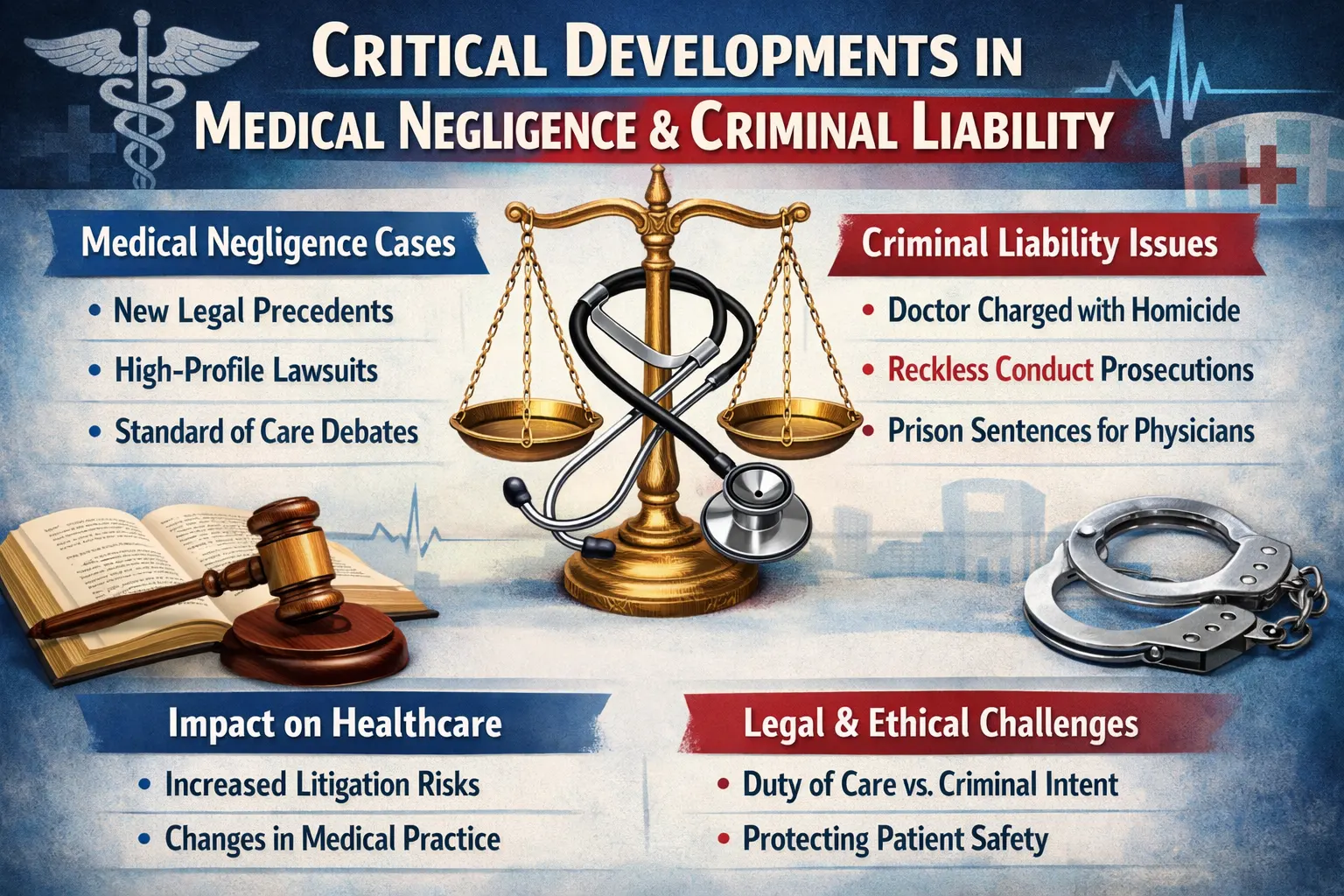
Introduction
1. Limitation on Consumer Forums: The “Scope of Pleadings” Doctrine
Case Reference: Deep Nursing Home vs. Manmeet Singh Mattewal (Supreme Court, Sept 2025)
Judicial Observation: The Supreme Court has set aside an order by the NCDRC which had held a doctor liable for negligence in antenatal care, despite the patient only alleging negligence in post-natal care.
Legal Implication: The Apex Court has reinforced the principle that Consumer Forums (District, State, or National) cannot travel beyond the pleadings filed by the complainant. They are adjudicatory bodies, not inquisitorial ones. A medical practitioner cannot be held liable for a charge they were never given an opportunity to defend against in the original complaint.
This article is my interpretation — from a legal, ethical, and practical lens — to help you stay compliant and confident.
2. Vicarious Liability: Visiting Consultants vs. Hospital Administration
Case Reference: Kamineni Hospitals vs. Peddi Narayana Swami (Supreme Court, 2025)
Judicial Observation: The Supreme Court addressed the question of whether a hospital can be held liable for the alleged negligence of a “Visiting Consultant” who is not a salaried employee. The Court ruled in the affirmative, stating that the hospital acts as the primary service provider to the patient.
Key Takeaway: The distinction between “employee doctors” and “independent consultants” is diminishing regarding liability towards the patient. The Court held that the hospital’s duty of care extends to ensuring that all medical staff, regardless of employment status, adhere to standard protocols.
3. Criminal Liability under BNS 2023: The “Registered” Requirement
Statute: Section 106(1) of The Bharatiya Nyaya Sanhita (BNS)
Statutory Analysis: The BNS introduced a specific provision for medical professionals involved in cases of death by negligence.
- General Provision: Imprisonment of up to 5 years.
- For Medical Practitioners: Imprisonment of up to 2 years (under Section 106(1)).
Critical Interpretation: The statute explicitly uses the term “Registered Medical Practitioner.” Legal interpretation suggests that this statutory protection (the reduced sentence cap) is strictly conditional upon the practitioner holding a valid, active registration with the relevant State or National Medical Council at the time of the incident.
⸻
DISCLAIMER
The content provided above is for general informational purposes only and constitutes a legal analysis of public judgments. It does not constitute legal advice or a legal opinion on any specific facts or circumstances. Readers are advised to consult with their own legal counsel and refer to the full text of the judgments cited.
⸻